About 223 minutes
India for Indians Enlarged Edition — Text and Context
Democracy Rights
51,288 recorded words. 119 minutes difference from this book's estimate.
View Gutenberg source #45247
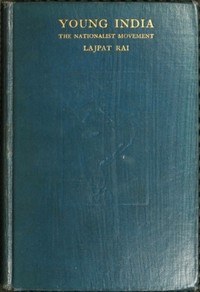
For Young India An interpretation and a history of the nationalist movement from within — Story, Setting & Ideas, the stored edition analysis reports 78,587 words, 5 hr 42 min estimated reading time, and 9 detected text sections.
The text analysis averages about 21.8 words per sentence, while the detected sections provide another way to judge how the source is divided.
Project Gutenberg metadata also associates the work with “India -- Politics and government -- 1765-1947,” connecting these edition facts with the source record’s subject description.
Explore this collection
These alternatives are selected using recorded categories and estimated reading time.
About 223 minutes
Democracy Rights
51,288 recorded words. 119 minutes difference from this book's estimate.
View Gutenberg source #45247About 143 minutes
Democracy Rights
32,702 recorded words. 199 minutes difference from this book's estimate.
View Gutenberg source #40461About 543 minutes
Democracy Rights
124,721 recorded words. 201 minutes difference from this book's estimate.
View Gutenberg source #18250Search stored excerpts and compare books → Choose by your preferences →
Choices use stored catalog measurements. Estimates vary with reading speed. A shared category is a catalog label, not a claim that two books have the same argument or literary quality.
Search reads excerpt text stored with this catalog and links to its associated Gutenberg record. The connection is stored in the site database; this tool does not recheck that every excerpt is word-for-word identical to that external record. Excerpt search does not cover every chapter and does not verify historical publication dates.
Catalog snapshot checked: 2026-09-26. Coverage: 90 public books, 90 available source excerpts.
Calculated from edition completeness, EPUB availability, text structure and catalogue metadata. Not a user rating.
Total of 100 points, scaled to a 2.5-5.0 range. Editions with an empty description or a missing EPUB file are not scored.
Public-domain source text
The source text is kept in the dedicated reader, separate from this catalogue record and its commentary.
Lajpat Rai's Young India opens with a foreword by Jabez Thomas Sunderland that situates the author as a prominent public figure in the Punjab—a leading member of the bar, active in the Indian National Congress, and a founder of the Anglo-Vedic College in Lahore. The book's subtitle, "An Interpretation and a History of the Nationalist Movement from Within," signals its dual aim: to narrate events and to offer an insider's perspective on the movement's rationale and evolution. The excerpts provided focus heavily on the early Congress, including a detailed account of Allan Octavian Hume's role and the alleged intelligence that spurred its founding. Rai's voice is analytical, often citing documents and speeches, and he does not shy from critiquing the movement's early deference to British rule.
The excerpts devote considerable space to the origins of the Indian National Congress, particularly through a memorandum by Allan Octavian Hume. Rai reproduces Hume's description of seven large volumes containing reports from over thirty thousand informants, which convinced him of an imminent "terrible outbreak" of violence among the lowest classes. Hume's language is vivid: he speaks of "a sudden violent outbreak of sporadic crimes, murders of obnoxious persons, robbery of bankers, looting of bazaars." Rai uses this evidence to argue that the Congress was founded partly as a safety valve—a channel for discontent that might otherwise explode. He notes that the Congress's early leaders considered British rule "of vital importance to India herself," making political reform a secondary goal. This section shows Rai as a historian who lets primary sources speak, while also framing them within a broader argument about the movement's original intentions.
Rai does not merely recount the Congress's founding; he offers a pointed critique. He writes that the founders were "anxious to do everything in their power, not only to save that rule from any danger that threatened it, but even to strengthen it." The redress of grievances, he suggests, was "only a by-product and of secondary importance." This is a striking claim from a nationalist leader, and it reveals Rai's willingness to challenge the movement's own mythology. The excerpts do not show how Rai develops this argument across the full book, but the tone is measured and evidence-based. He quotes Hume and Wedderburn at length, allowing their words to support his interpretation. The reader is left to wonder how Rai reconciles this critique with his own active role in the Congress—a tension that the excerpts do not resolve.
The foreword by Sunderland highlights Rai's leadership in the Arya Samaj, a religious reform movement that "rejects idolatry and caste" and promotes education and women's elevation. This context is essential for understanding Rai's broader worldview, though the excerpts from the main text do not discuss the Arya Samaj directly. Instead, they focus on political history. The juxtaposition suggests that Rai's nationalism was inseparable from social reform—a point that the excerpts hint at but do not elaborate. Sunderland also notes Rai's relief work during famines and his efforts for the "Depressed Classes." These details, drawn from the foreword rather than Rai's own prose, indicate that Young India is as much a personal testament as a historical account. Readers should note that the excerpts are heavily weighted toward the Congress's early years; the book's treatment of later developments or of Rai's own activism remains largely unrepresented.
Readers approaching Young India should be aware that the excerpts represent only a fraction of the work—specifically, the early chapters on the Congress's founding. Rai's full argument likely extends to later movements, including the Swadeshi and Home Rule campaigns, but these are absent from the provided text. The book's value lies in its insider perspective and its willingness to critique nationalist orthodoxy. For a complete understanding, one should read the entire work, paying attention to how Rai balances historical narrative with political advocacy.
Reading Lajpat Rai’s Young India, I felt the ache of a movement straining toward a future it couldn’t yet name. The same quiet longing surfaced later, while revisiting The Gaelic State in the past & future — A Reader’s Guide. Both books seem to hold a people’s breath before the exhale—a shared, tentative hope for something whole.
Save your reaction, strongest insight, and memorable passage.