eBooks
90 Books foundWelcome to the URSOI Public Domain Literature Library
The archive you are browsing contains ninety public-domain works selected and presented by the literary critic Richard Austen. Each title has been chosen for its intellectual usefulness and historical significance, not for algorithmic popularity. The collection spans political philosophy, historical analysis, memoir, and satire, with a particular concentration on government and public life.
Browsing the Catalogue
Works may be located by browsing The catalogue currently contains 4 active subject categories: Political Thought, Government, Democracy Rights, and International Affairs. Categories are used as browsing aids and may overlap where a work reasonably fits more than one subject. Every book is assigned one category based on its primary subject matter; the current catalogue organises all titles under Government. Within this category, readers will find works ranging from Xenophon's paired analysis of Athenian and Spartan governance to Theodore Roosevelt's state papers, covering ancient, early modern, and modern political thought.
Book Records and Source Attribution
Each book record includes the title, author or authors, translator where applicable, publisher, and a set of Library of Congress subject keywords. A supplementary catalogue note summarises the work's content and offers a critical perspective. All texts in this library originate from Project Gutenberg, ensuring they are legally in the public domain. The edition facts—publisher and source—are plainly stated so that readers understand the provenance of each digital file.The catalogue currently uses four active subject categories: Political Thought, Government, Democracy Rights, and International Affairs. It brings together diverse works that share a concern with the structures, practitioners, and consequences of government. Readers interested in comparative constitutions will find Aristotle alongside Xenophon; those studying colonial governance can move from Sol Plaatje to Annie Besant. The category label is deliberately broad to accommodate the range of approaches represented.
Three Reading Paths
- Foundations of Political Thought: Begin with Aristotle's Politics (translated by William Ellis) for a systematic theory of constitutions and citizenship, then read Xenophon's The Polity of the Athenians and the Lacedaemonians for a historical contrast between Athenian democracy and Spartan oligarchy. Complete the path with Edmund Burke's Thoughts on the Present Discontents to see how classical ideas were adapted to 18th-century parliamentary crises.
- Colonialism and Resistance: Start with Sol Plaatje's Native Life in South Africa, a firsthand exposé of the Natives' Land Act's effects. Follow with Annie Besant's The Case for India, blending spiritual nationalism with political critique. End with Lala Lajpat Rai's Young India, an insider's interpretation of the nationalist movement. This path traces how colonial subjects articulated demands for justice and self-rule.
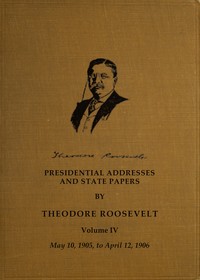
- Presidential Rhetoric and Governance: Read Theodore Roosevelt's Presidential Addresses and State Papers (volumes 2, 3, and 4) for a direct encounter with early 20th-century American executive discourse. Then examine Thomas Jefferson's Memoir, Correspondence, and Miscellanies (volume 4) for an earlier presidential perspective. Finally, consider Albert Gallatin's Peace with Mexico as a dissenting voice on foreign policy, illustrating the range of public argument in the republic's history.
Practical Notes
All works are freely downloadable. No registration is required. the catalogue project invites reader reports of errors or suggestions via the contact page. The catalogue is maintained as a personal editorial project, not an institutional repository.
Bibliographic dates and catalogue measurements
The catalogue distinguishes the Project Gutenberg digital release from a work’s original or first publication. Project Gutenberg is identified as the digital source for the edition available here; its release year is therefore shown as Gutenberg Release Year, not as the work’s original publication year.
When an explicit first-publication or issue date can be supported directly by the title or issue information, it may be shown separately as First Publication Year. When that date cannot be confirmed, the catalogue displays Not confirmed rather than guessing a year.
Where the source text can be measured reliably, the catalogue may provide word count and estimated reading time. These measurements describe reading scope and are not quality rankings.
The current catalogue contains 4 active subject categories: Political Thought, Government, Democracy Rights, and International Affairs. Categories are browsing aids and may overlap where a work reasonably fits more than one subject.
- Featured