About 91 minutes
The Case for India — Themes and Context
Democracy Rights
20,905 recorded words. 31 minutes difference from this book's estimate.
View Gutenberg source #12820
The catalog record for The Disfranchisement of the Negro The American Negro Academy. Occasional Papers No. 6 — Edition Insights provides practical reading context through 13,779 words, 1 hr estimated reading time, and 2 detected text sections.
The text analysis averages about 28.5 words per sentence, while the detected sections provide another way to judge how the source is divided.
Project Gutenberg metadata also associates the work with “United States -- Politics and government,” connecting these edition facts with the source record’s subject description.
Explore this collection
These alternatives are selected using recorded categories and estimated reading time.
About 91 minutes
Democracy Rights
20,905 recorded words. 31 minutes difference from this book's estimate.
View Gutenberg source #12820About 95 minutes
Democracy Rights
21,652 recorded words. 35 minutes difference from this book's estimate.
View Gutenberg source #35349About 115 minutes
Democracy Rights
26,313 recorded words. 55 minutes difference from this book's estimate.
View Gutenberg source #77101Search stored excerpts and compare books → Choose by your preferences →
Choices use stored catalog measurements. Estimates vary with reading speed. A shared category is a catalog label, not a claim that two books have the same argument or literary quality.
Search reads excerpt text stored with this catalog and links to its associated Gutenberg record. The connection is stored in the site database; this tool does not recheck that every excerpt is word-for-word identical to that external record. Excerpt search does not cover every chapter and does not verify historical publication dates.
Catalog snapshot checked: 2026-09-26. Coverage: 90 public books, 90 available source excerpts.
Calculated from edition completeness, EPUB availability, text structure and catalogue metadata. Not a user rating.
Total of 100 points, scaled to a 2.5-5.0 range. Editions with an empty description or a missing EPUB file are not scored.
Public-domain source text
The source text is kept in the dedicated reader, separate from this catalogue record and its commentary.
John L. Love opens his 1899 pamphlet with an epigraph from Edmund Burke—'A Constitution formed so as to enable a party to overrule its very government'—and immediately names the assault on Negro political rights as a symptom of an animus 'rooted in the past.' The prose is forensic and unsparing: Love describes the disfranchisement movement not as a response to any 'abnormal or perilous condition' but as a deliberate effort to prevent the Negro's 'advent of intelligence and wealth.' He insists that the assailants' language of 'benign civilization' resolves into a simple claim: the Negro's well-being is inconsistent with the economic interests of a few white men.
Love’s diction is consistently legal and moral. He uses 'assault' and 'tyranny' as structural terms, not mere epithets. The phrase 'under the forms of law' signals his central argument: the disfranchisement is a perversion of constitutional process. He characterizes the assailants' pretexts—'feigned social perils' and 'political nightmares'—as a 'juggling' of language. The pamphlet’s opening paragraphs build a cumulative indictment: the assault is 'iniquitous in conception,' executed with 'wicked and violent disregard of political morals.' Love does not rely on emotional appeal alone; he anchors each charge in the assailants’ own stated justifications, which he then dismantles by exposing their internal contradictions.
Love devotes careful attention to the Mississippi Constitution of 1890, which required applicants to give 'a reasonable interpretation' of a section of the constitution to the satisfaction of a registration officer. He contrasts this with Massachusetts’ Amendment XX, which simply required reading the constitution and writing one’s name. The disparity in education spending is his key evidence: Mississippi spent less than one dollar per capita on Negro education, while Massachusetts spent over four dollars. Love notes that the Negro does not object to a 'fair educational test,' but the Mississippi provision is designed to be administered arbitrarily. The 'understanding clause' is a trap, not a standard.
Love shows how South Carolina’s 1895 constitution copied Mississippi’s pattern but with a twist: its understanding clause was limited to January 1, 1898, after which a literacy or property test applied. He calculates that subdivision (c) disfranchised over one hundred thousand electors who had passed school age. The property test—owning $300 in assessed property—is presented as facially neutral, but Love points out that fairness is impossible when the state spends $4.23 per white child and only $1.35 per Negro child. The pamphlet’s method is comparative: he sets each Southern provision alongside Northern equivalents and exposes the gap between stated principle and actual practice.
Love repeatedly insists that the present assault cannot be understood without its historical roots. He writes that the 'spirit which prompts the assault has ever fostered ignorance and endeavored to perpetuate it.' This is not a claim about distant events but about a continuous policy: the same class that now fears Negro political power has systematically denied education and economic opportunity. Love’s tone is that of a lawyer presenting a brief, not a partisan. He anticipates counterarguments—that disfranchisement is a defense of civilization—and refutes them by showing that the 'civilization' in question has always depended on Negro subjection. The pamphlet’s structure is cumulative, each section adding evidence to a single, tightly reasoned case.
Love’s pamphlet is a work of political analysis, not a narrative. Readers will find no anecdotes or portraits; instead, the text proceeds by logical argument and legal comparison. The author’s voice is that of a constitutional critic, and his evidence is drawn from statutes, education reports, and the assailants’ own statements. To follow his argument, attend to the way he pairs each Southern provision with its Northern counterpart and to the recurring emphasis on funding disparities. The pamphlet is a document of its moment—1899—but its method of exposing the gap between legal form and discriminatory intent remains instructive.
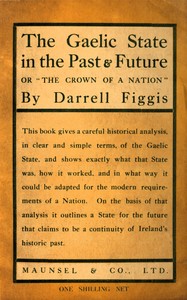
Reading how Mississippi cloaked its “understanding clause” in fair phrases reminded me of my grandfather’s stories about polling-day arithmetic, where every question had a hidden cost. It felt like when I first held The Gaelic State in the past & future — A Reader’s Guide — that quiet ache of a language lost behind official paperwork, both books whispering that some doors close with a borrowed key.
A brief reflection can help important ideas stay with you longer.